
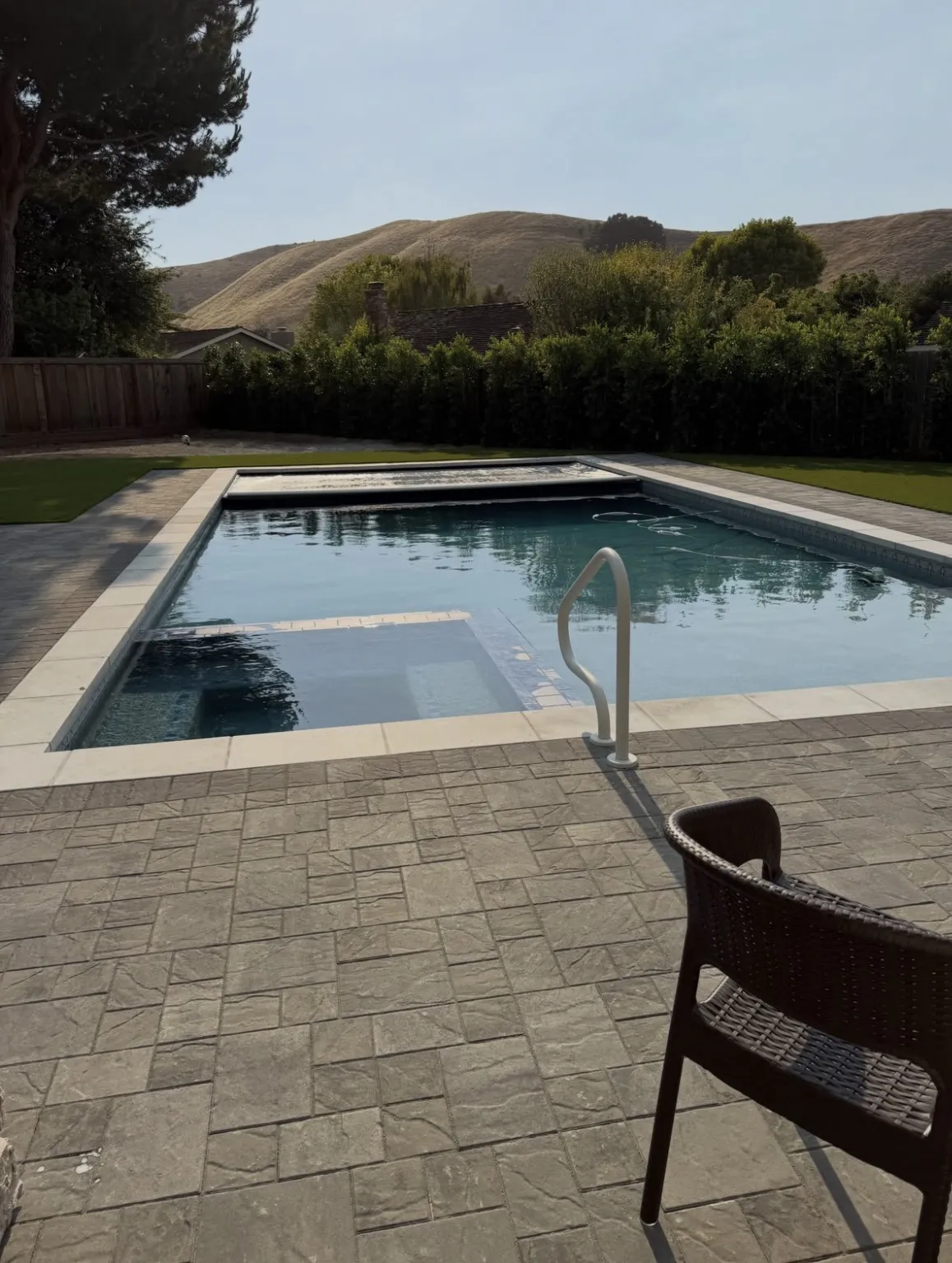
Pool remodeling
Pool Remodeling, Back to the Shell
The concrete tank in your yard is almost certainly fine. Nearly everything else on an ageing pool — the surface, the tile, the coping, the deck, the plumbing, the equipment — is a wear item, and wear items can be replaced.
- CSLB #1079748 · C-53 Swimming Pool
- Based in Salinas, working the Monterey Bay
- Monday to Saturday, 8am to 5pm
What is actually worn out
A pool that looks finished is usually four or five separate problems, each with its own life expectancy, that happened to arrive at the end of it together.
A gunite shell is a structural element and it lasts a very long time. The plaster on the inside of it does not. The waterline tile loses grout and pops off. Coping stones lift and crack as the deck around them moves. The deck itself spalls and stains. The pump and heater reach the end of their service lives. The lights are incandescent and nobody makes the bulb any more.
Because these fail on overlapping schedules, most pools hit a point in their second or third decade where doing any one of them alone feels like poor value. That is the moment a remodel makes sense: the deck has to come up to reset the coping anyway, the plumbing is accessible while it is up, and the pool is drained for plaster regardless. Doing them together costs far less than doing them in four separate visits, and it gives you one pool rather than a patchwork.
What we are not doing is replacing the pool. The shell you are standing in is the shell you keep, which is exactly why a remodel delivers a genuinely new pool for a fraction of new construction.
What a full remodel usually includes
Scope is set by what your pool actually needs. These are the pieces, and any of them can be in or out.
- Interior finishChip out the failed plaster back to sound shell, prepare, and apply new plaster, quartz or pebble. This is the item that makes a pool look new.
- Waterline tileOff and replaced. The band everyone looks at, and the cheapest place to make a pool look like it was designed this decade.
- CopingThe cap between deck and water. Replacing it is what lets the deck and the pool read as one piece again.
- DeckingReplace, resurface or overlay. Also the moment to fix drainage that has been sending water at the house for twenty years.
- PlumbingWith the deck up, failed lines can be replaced and undersized suction and return lines corrected. This is the only realistic window to fix hydraulics.
- EquipmentVariable-speed pump, current-generation filter and heater, modern sanitising, and automation that puts the whole pad on your phone.
- LightingOld incandescent niches to LED. Colour, far less power, and bulbs that last years rather than a season.
- SafetyWhen a remodel is permitted, California’s pool safety requirements come back into scope. An automatic safety cover or a compliant barrier is decided now, not later.
- StructureAdding a spa, a tanning ledge, a bench or steps means new gunite tied into the existing shell. Entirely doable, and it is the point at which a remodel becomes a redesign.
- Water featuresSpillways, sheer descents and scuppers can be added during a remodel because the plumbing is open and the deck is up.
The remodel nobody budgets for: hydraulics
Pools built before variable-speed pumps were common were plumbed for a single-speed pump running flat out — often in pipe that is smaller than anyone would use today. Put a modern variable-speed pump on that plumbing and it works, but it cannot deliver its actual benefit, because the pipe is the bottleneck rather than the motor.
During a remodel with the deck up, that is fixable. Larger pipe, fewer sharp fittings, a properly sized suction line and a return layout that actually circulates the whole pool. It is unglamorous, it is invisible in every photograph, and it is the difference between a pool that costs a little to run and one that costs a lot.
It is also the only time it is affordable. Re-plumbing an intact deck means cutting concrete, and cutting concrete costs more than the pipe.
Resurfacing, or a full remodel?
If the shell is sound, the deck is in good order, the coping is tight and the equipment is current, then what you need is a resurfacing: new interior finish and new waterline tile, and the pool is back for another long stretch. That is a contained job with a contained price.
If the deck is failing, the coping is lifting, the plumbing is original and the equipment is on borrowed time, doing only the plaster is money spent on the shortest-lived part of the problem. Resurfacing on its own is the right answer far more often than contractors admit — and the wrong one when everything around it is also finished.
We will tell you which of those two you are, and we will tell you if the honest answer is to do nothing this year.
Remodeling questions
How often does a pool need resurfacing?
It varies with the finish and, much more, with how consistently the water has been balanced. Plaster is the shortest-lived, quartz longer, pebble longer still. Rather than working to a calendar, look at the surface: staining that will not brush out, rough or chalky patches underfoot, exposed aggregate where there should not be any, and persistent chemical demand are the signals.
Can you add a spa to an existing pool?
Yes. It means new structural gunite tied into the existing shell, new plumbing back to the pad, and usually a heater that can serve both. It is real construction rather than an accessory, but it is one of the most transformative things you can do to an older pool.
Do I need a permit for a pool remodel?
Usually, and it depends on the scope. Structural work, plumbing, electrical, gas and decking generally require a permit. This matters for more than paperwork: California’s Swimming Pool Safety Act applies when a building permit is issued for the remodel of an existing pool at a single-family home, not only for new construction, so the remodel brings the two-of-seven safety feature requirement back into scope. We will tell you what your jurisdiction requires before work starts, and we pull the permit.
How long does a remodel take?
Much less than a new build, because the hole already exists — but the range is wide, from a contained resurfacing to a full tear-out with new decking and replumbing. We will give you a schedule when we have seen the pool.
Will the new plaster match the old tile?
Probably not, and this catches people out. A new interior finish changes the water colour, which changes how existing tile reads. If you are keeping the tile, look at finish samples against it wet. Most people end up replacing the waterline tile at the same time, which is why the two are usually quoted together.
Is it ever better to fill the pool in?
Occasionally, and we will say so. If the shell has real structural failure, if the pool is badly sited for how you now use the yard, or if it is so small it will never be used, spending remodel money on it is not a favour to you. That is a conversation worth having honestly before anyone quotes anything.
Where these facts come from
- California Health and Safety Code § 115922Checked September 12, 2026
Free estimate
Tell us about the yard
Send a few photos and roughly what you have in mind, and we will tell you what is realistic on your site. Estimates are free and there is no obligation.